

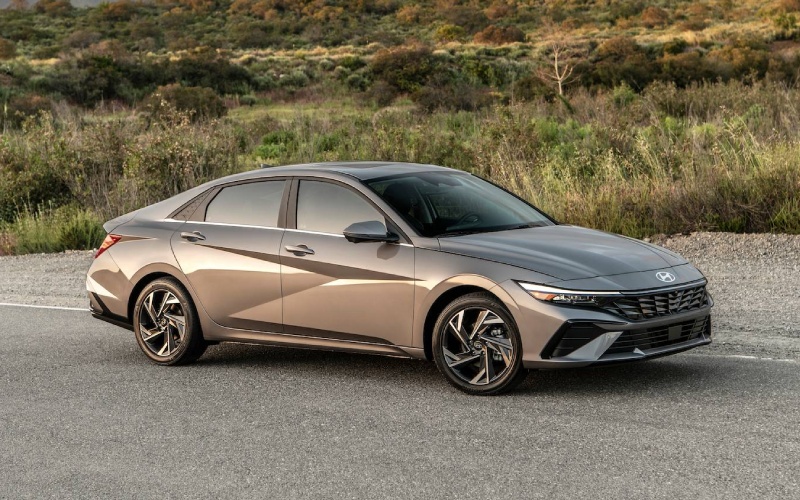
Long Hyundai - 2026 Hyundai ELANTRA vs. 2026 Mazda3 Sedan: Which Sedan Has the Better Driver-Assistance Tech for Daily Drives Around Dayton, TN?
Drivers comparing compact sedans often ask a straightforward question: Which model gives me the most helpful driver-assistance technology for real-world driving? If your daily loop includes Dayton, TN and the surrounding highways and byways, you are probably looking at the 2026 Hyundai ELANTRA and the 2026 Mazda Mazda3 Sedan. Both bring confidence to the table, but there are meaningful differences in how each sedan’s systems support you during lane changes, merges, and longer stints behind the wheel.
The ELANTRA stands out with a broad standard suite—Hyundai SmartSense—on every trim. That includes Forward Collision-Avoidance Assist with Pedestrian Detection (FCA-Ped), Lane Keeping Assist (LKA), Lane Following Assist (LFA), Blind-Spot Collision Warning (BCW), Driver Attention Warning (DAW), High Beam Assist (HBA), and Rear Cross-Traffic Collision-Avoidance Assist (RCCA). The last item matters in busy parking areas because it can automatically apply brakes while backing if it senses cross-traffic. The Mazda3 equips comparable core features such as Mazda Radar Cruise Control with Stop & Go, Lane Departure Warning System, Lane-keep Assist, Blind Spot Monitoring, Rear Cross Traffic Alert, Driver Attention Alert, and High Beam Control. The difference is that Mazda3’s system provides alerts for rear cross-traffic rather than automatic braking, which many shoppers value for the added layer of protection when visibility is limited.
Highway confidence for longer stretches
For regular interstate driving—whether you are cruising US-27 toward Chattanooga or hopping on TN-29—Hyundai’s available Highway Driving Assist (HDA) on ELANTRA Limited is a subtle but powerful helper. HDA combines adaptive cruise with lane-centering, which helps keep the vehicle positioned even through gentle curves, reducing fatigue on longer journeys. Mazda3’s suite features strong adaptive cruise and lane-keep functionality, but it does not present an HDA-style integrated lane-centering system in the sedan’s published feature list. That integrated approach is what many Dayton-area commuters notice after a back-to-back drive.
Both sedans offer Smart Cruise technologies that can bring the vehicle to a stop and resume within traffic, easing stress in congestion. ELANTRA’s Smart Cruise Control with Stop & Go is available on SEL Sport Premium and Limited, and it pairs naturally with Lane Following Assist on multi-lane roads. Mazda Radar Cruise Control with Stop & Go is similarly refined and maintains gaps smoothly. The difference is how the ELANTRA layers lane-centering on top of those features for a cohesive highway feel.
Parking lots, school pickups, and everyday errands
Driver-assistance is not just about the interstate. It is also about navigating lots, angled exits, and quick errands across town. Here again, ELANTRA’s Rear Cross-Traffic Collision-Avoidance Assist can step in if a passing vehicle or cyclist crosses behind you as you back out, automatically applying the brakes to avoid or mitigate a collision. Mazda3’s Rear Cross Traffic Alert does a good job of alerting you, and many drivers appreciate its sensitivity. The automatic braking capability in ELANTRA adds a level of redundancy that feels reassuring, especially in tight lots or when sightlines are blocked by larger vehicles.
Both vehicles also support safer exits. Hyundai’s Safe Exit Warning and Mazda’s vehicle exit warning watch for approaching traffic when doors open. That kind of everyday practicality has tangible value on packed Main Street parking or after-school pickup zones when activity is high and attention is divided.
Display tech and situational awareness
How driver-assistance information is presented can be as important as which features are equipped. ELANTRA’s available dual 10.25-inch displays—one touchscreen for infotainment and one digital instrument cluster—make alerts and guidance easy to understand at a glance. With Lane Following Assist and HDA active, the digital cluster visualization helps you see how the car perceives the lane. Mazda3’s center display is crisp and easy to read, and its minimalist instrument panel is clean, but it does not mirror the ELANTRA’s side-by-side dual-display setup.
For connectivity that supports situational awareness, both cars offer wireless Apple CarPlay® and Android Auto™ integration. ELANTRA adds available Wi-Fi hotspot capability and Bluelink+ services that allow remote start, lock/unlock, and more with no monthly fees for original owners. Mazda Connected Services provides a robust set of remote features with a 1-year trial. The everyday difference shows up when you rely on connected features long-term—especially if you regularly precondition your cabin during hot afternoons or use remote lock checks throughout the week.
What most Dayton shoppers should test on the drive
If you are trying to decide between these two, put these systems to the test on the same route. Activate adaptive cruise and lane support on your highway loop, then spend time in a busy shopping center to evaluate rear cross-traffic alerts and, in the ELANTRA, automatic braking. Note how information appears on the screens and how intuitively you can adjust settings on the move. Consider a dusk drive as well to experience High Beam Assist in action on both sedans.
- Highway assist feel: Does lane-centering reduce steering corrections and make long stretches less tiring?
- Low-speed safety backups: Do you prefer rear cross-traffic alerts only, or the added confidence of automatic braking as in ELANTRA?
- Screen clarity and alerts: Which display layout helps you process guidance fastest without distraction?
One more tip: bring your smartphone to pair with each car. Try wireless Apple CarPlay® or Android Auto™ and confirm how quickly your preferred map app and audio respond, then check whether connected services like remote start and lock/unlock align with your routine.
Frequently Asked Questions:
Does the 2026 Hyundai ELANTRA have lane-centering on highways?
Yes. Highway Driving Assist (HDA) is available on ELANTRA Limited and combines adaptive cruise with lane-centering support for added stability on highways.
Can the 2026 Mazda Mazda3 Sedan automatically brake while reversing for cross-traffic?
Mazda3 provides Rear Cross Traffic Alert to warn you, and Smart Brake Support - Forward for frontal situations. Its published feature list for the sedan does not indicate rear cross-traffic automatic braking.
Which sedan offers a hybrid powertrain for Dayton-area commuting?
The 2026 Hyundai ELANTRA offers an advanced Hybrid powertrain in multiple trims. The 2026 Mazda Mazda3 Sedan does not offer a hybrid variant.
Ultimately, driver-assistance is about reducing workload and enhancing awareness without numbing driver engagement. The ELANTRA’s combination of standard Hyundai SmartSense, available Highway Driving Assist, and Rear Cross-Traffic Collision-Avoidance Assist adds meaningful capability that shows up every day, whether you are heading to work, crossing the Tennessee River, or looping through neighborhood streets. The Mazda3 Sedan remains a polished, confident alternative with a strong safety baseline. If you want the most comprehensive assistance stack and connectivity for day-in, day-out driving, the ELANTRA is the better match for most Dayton shoppers.
For a tailored walkthrough of these systems on your familiar roads, schedule a drive with Long Hyundai—serving Ringgold, LaFayette, and Dayton. We will set up a route that mirrors your commute and help you compare settings side by side so your decision is clear and confident.


