

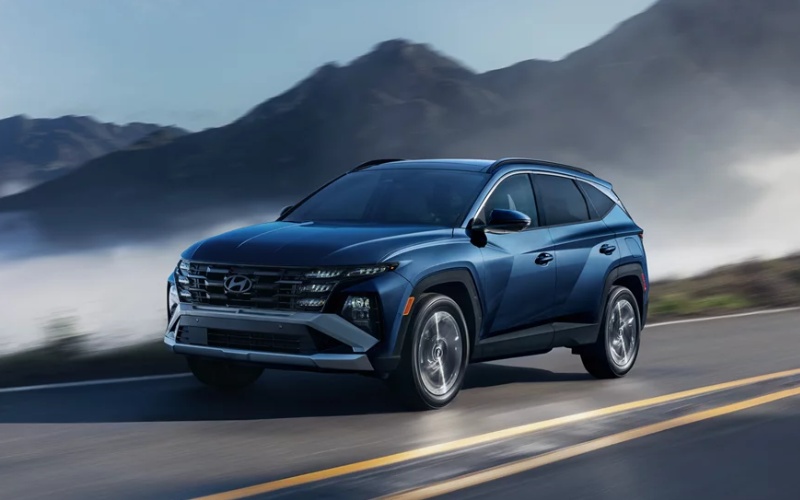
Long Hyundai - Which SUV handles daily commuting better for Dayton, TN drivers — the 2026 Hyundai TUCSON or 2026 Mazda CX-5?
Daily commuting puts a spotlight on real-world comfort, tech you’ll use every day, and how confidently a vehicle deals with traffic, parking, and changing conditions. The 2026 Hyundai TUCSON and 2026 Mazda CX-5 each show up with appealing designs and helpful safety features, but the way they approach the commute differs. Below, we break down the most common follow-up questions drivers ask us when comparing these two, and we share practical insights you can feel from the driver’s seat.
In short: if your commute ranges from quick school drop-offs to longer highway stretches with unpredictable merges and construction zones around Dayton, TN, the TUCSON’s smarter display layout, available lane-centering with Highway Driving Assist, and the option to go Hybrid or Plug-in Hybrid stand out. Mazda’s CX-5 brings Google built-in and standard AWD this year, which many drivers appreciate, but some of its advantages are balanced by the Tucson’s broader powertrain choices and ownership confidence.
Screen time that’s actually helpful
For a commuter, visibility and ergonomics can make or break a cabin. In the Tucson, the available Panoramic Curved Display pairs a 12.3-inch instrument cluster and 12.3-inch touchscreen under one sweeping pane, placing navigation, audio, and vehicle data where your eyes naturally rest. The CX-5 offers a single, larger touchscreen with Google built-in. That’s a win for Google loyalists who want native Google Maps and voice. The Tucson counters with clean menus, fast responses, and Apple CarPlay and Android Auto support that feel integrated rather than bolted on. If you prize a glance-friendly interface that keeps you focused on the next exit or the next green light, Tucson’s layout feels tailored to the task.
We also hear a lot about day-to-day parking. The Tucson’s available Surround View Monitor can show multiple vantage points around your vehicle, so pulling into tight curbside spaces outside local shops is a calmer process. The CX-5 offers a similar camera capability on select trims, and both SUVs make parking easier than an old-school mirror-only approach.
Driver assistance that reduces stress
Stop-and-go traffic and long highway slogs expose gaps in lesser systems. The Tucson’s available Highway Driving Assist — part of the Hyundai SmartSense family — blends adaptive cruise with lane-centering support to take the edge off longer drives. Lane Following Assist keeps you neatly in lane markings, while standard features like Forward Collision-Avoidance Assist, Lane Keeping Assist, and Blind-Spot Collision-Avoidance Assist help protect you from the unexpected.
Mazda’s i-Activsense brings a strong suite of driver aids as well, and the brand’s safety reputation is well-earned. The difference in daily commuting is feel and tuning. Tucson’s interventions are transparent and confidence-inspiring, and the interface to manage these systems is intuitive. If your day regularly bounces between school zones and interstate speeds, the Tucson’s consistency and clarity are real assets.
AWD and traction for real roads
Both SUVs offer traction solutions that inspire confidence when weather and road surfaces change. For the Tucson, available HTRAC All Wheel Drive and multiple drive modes help you tailor responses to rain-slicked backroads or gravel pull-offs near weekend parks. The CX-5 brings standard i-Activ AWD for 2026, which is an excellent addition. For commuters, the important question is not just “Do I have AWD?” but “Does the system feel natural with how I drive?” Tucson’s tuning is calm, predictable, and easy to trust, and that’s exactly what you want during that late-afternoon downpour when traffic bunches up fast.
If you split your time between surface streets and highway cruising, either system will serve you, but Tucson’s quieter cabin and steering feel give it a slight comfort edge on longer stretches, especially when the day runs long.
Powertrains that fit your routine
Here’s where the 2026 Hyundai Tucson opens up more paths. Beyond the smooth, quiet 2.5-liter engine, Tucson Hybrid and Tucson Plug-in Hybrid powertrains are available now. If your weekly routine includes plenty of short trips and you want fewer gas stops without changing your habits, Hybrid is a smart choice. If you have access to charging at home or work and love the idea of electric driving for many daily miles with the flexibility of gasoline for road trips, Tucson Plug-in Hybrid is a compelling solution.
The 2026 CX-5 arrives with its 2.5-liter engine and a hybrid scheduled for a later model year. That means if you want electrified commuting today, Tucson is the choice that meets you where you are, not where you might be down the road.
Ownership confidence commuters appreciate
Commuters ask us about long-term peace of mind as much as ride quality. Hyundai’s warranty coverage — including a 10-Year/100,000-Mile Powertrain Limited Warranty — and 3 years/36,000 miles of complimentary maintenance translate into years of low-hassle driving. That’s especially reassuring when your schedule is already full. The CX-5’s maintenance and warranty picture is more conventional for the segment. Advantage: Tucson.
Connectivity also matters. With Bluelink+, Tucson offers remote lock/unlock, remote start, and vehicle status checks from your smartphone, which is the kind of convenience that saves minutes every week. Mazda counters with Google built-in and strong connected features of its own, but commuting value is about how easily tech blends into your routine — from preconditioning the cabin to verifying you locked the doors after a hectic drop-off.
Frequently Asked Questions:
Which SUV is better for long highway commutes?
We favor Tucson thanks to available Highway Driving Assist, a quiet ride, and an easy-to-glance Panoramic Curved Display that keeps navigation and driver info in clear view.
Do both models offer a 360-degree camera?
Yes, both offer a surround or 360-degree view on select trims. Tucson’s multi-angle views make low-speed maneuvering especially straightforward.
Can I get a hybrid now?
Yes with Tucson — Hybrid and Plug-in Hybrid options are available for 2026. Mazda has announced a CX-5 hybrid is coming for a later model year, not at launch.
Which infotainment system is easier to live with?
If you want native Google apps in the dash, CX-5 has an edge. If you prefer a clean dual-screen setup, seamless smartphone integration, and simple controls, Tucson is the better daily partner.
How we recommend deciding
Test drive both with your actual commute in mind: the time of day you normally drive, the routes you take, and the parking spaces you use most often. Pay attention to display readability, steering feel at 45–70 mph, and how lane-centering behaves in mild curves. If electrified driving appeals to you now, the Tucson Hybrid and Tucson Plug-in Hybrid are ready to go.
When you’re ready to compare both back-to-back, Long Hyundai — serving LaFayette, Dayton, and Athens — can set up an efficient test-drive plan and help you align powertrain, features, and maintenance coverage with your daily routine. For many commuters, the Tucson’s blend of calm control, thoughtful tech, and long-run confidence makes it the compact SUV to start with, and more often than not, the one to take home. Long Hyundai is here to help you find the configuration that fits just right.


